Promotion
Use code MOM24 for 20% off site wide + free shipping over $45
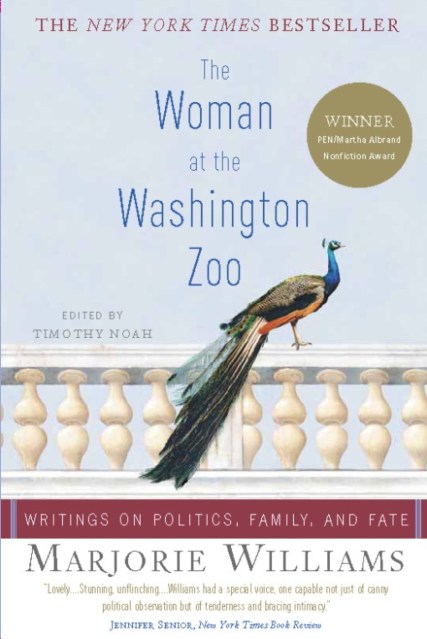
The Woman at the Washington Zoo
Writings on Politics, Family, and Fate
Contributors
Formats and Prices
Price
$11.99Price
$15.99 CADFormat
Format:
- ebook $11.99 $15.99 CAD
- Trade Paperback $16.99 $19.99 CAD
This item is a preorder. Your payment method will be charged immediately, and the product is expected to ship on or around March 31, 2007. This date is subject to change due to shipping delays beyond our control.
Also available from:
Williams also penned a weekly column for the Post’s op-ed page and epistolary book reviews for the online magazine Slate. Her essays for these and other publications tackled subjects ranging from politics to parenthood. During the last years of her life, she wrote about her own mortality as she battled liver cancer, using this harrowing experience to illuminate larger points about the nature of power and the randomness of life.
Marjorie Williams was a woman in a man’s town, an outsider reporting on the political elite. She was, like the narrator in Randall Jarrell’s classic poem, “The Woman at the Washington Zoo,” an observer of a strange and exotic culture. This splendid collection — at once insightful, funny and sad — digs into the psyche of the nation’s capital, revealing not only the hidden selves of the people that run it, but the messy lives that the rest of us lead.
Genre:
- On Sale
- Mar 31, 2007
- Page Count
- 384 pages
- Publisher
- PublicAffairs
- ISBN-13
- 9781586485412
You May Also Like


Newsletter Signup
By clicking ‘Sign Up,’ I acknowledge that I have read and agree to Hachette Book Group’s Privacy Policy and Terms of Use